
📉 Why Most Creator Startups Fail (And How to Avoid It)
Hard truths, real stories, and smart moves to help you build something creators actually want

👋 Hey, Kevin here. I write about the business of adult platforms—what works, what crashes, and how to build something that actually makes money (without losing your mind). This one’s free—subscribe to get more no-fluff breakdowns in your inbox.
Every month, new platforms try to break into the creator monetization space—subscription-based fan platforms, niche marketplaces, or OnlyFans-style alternatives aimed at helping creators earn more.
But here’s the hard truth:
Most of them never make money. Many don’t survive beyond a few months.
Over the past 10+ years, I’ve worked with dozens of startups building tools and platforms for creators—especially in adult-friendly and high-risk verticals. Only a small handful are still active. The rest launched with hype, funding, and ambition—but quietly disappeared.
The opportunity is real. The profits are possible. But the space is crowded, competitive, and unforgiving if you don’t build it right.
In this post, I’ll break down the 7 most common failure points I’ve seen—and what successful platforms do differently to thrive..
Why Do So Many Fail?
Because everyone wants to start making money from day one. And let’s be honest—nobody’s building an adult website for charity.
But here’s what most founders don’t realize: you need a mountain of patience. Growth in the adult space is slow, competitive, and demanding. If you expect instant results, you’re setting yourself up for disappointment.
I’ve seen the inner workings of these startups, and today, I’m pulling back the curtain.
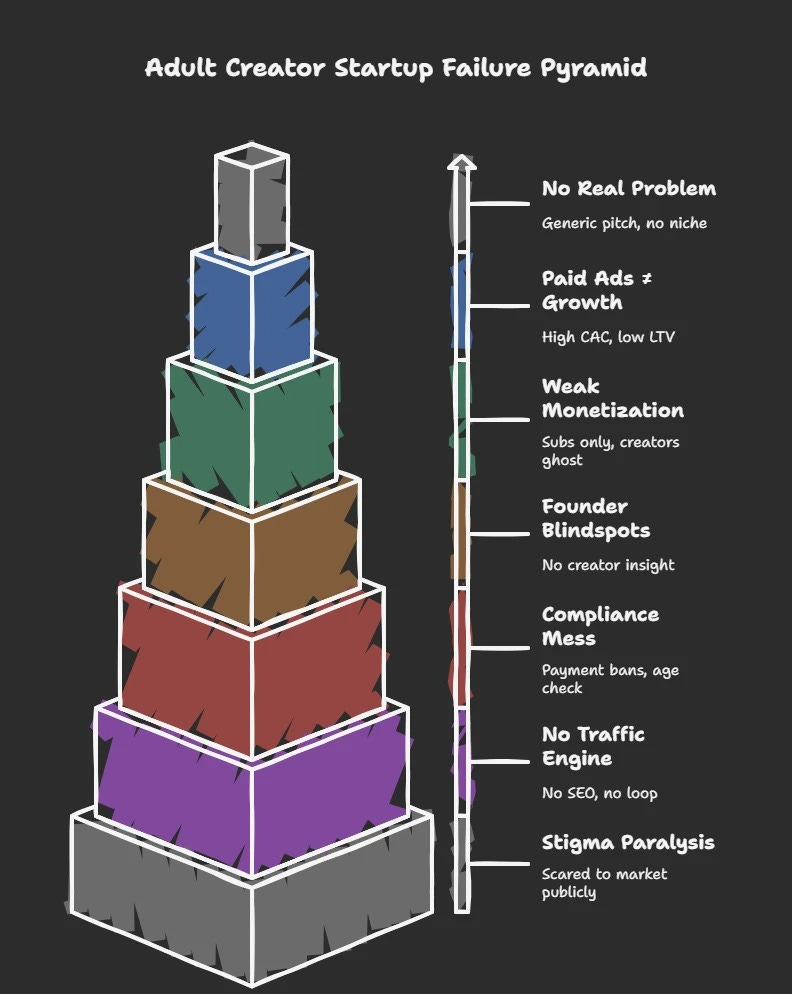
The 7 Failure Traps:
1. 🚫 No Real Problem to Solve
Many startups set out to build a “better version of OnlyFans” without truly differentiating themselves. They copy existing features and hope that better branding or UI will be enough.
But here’s the reality:
If a creator can’t tell why your platform matters within 5 seconds, they won’t stay.
The most successful platforms don’t just improve—they position. They focus on a niche, a new creator experience, or a monetization edge.
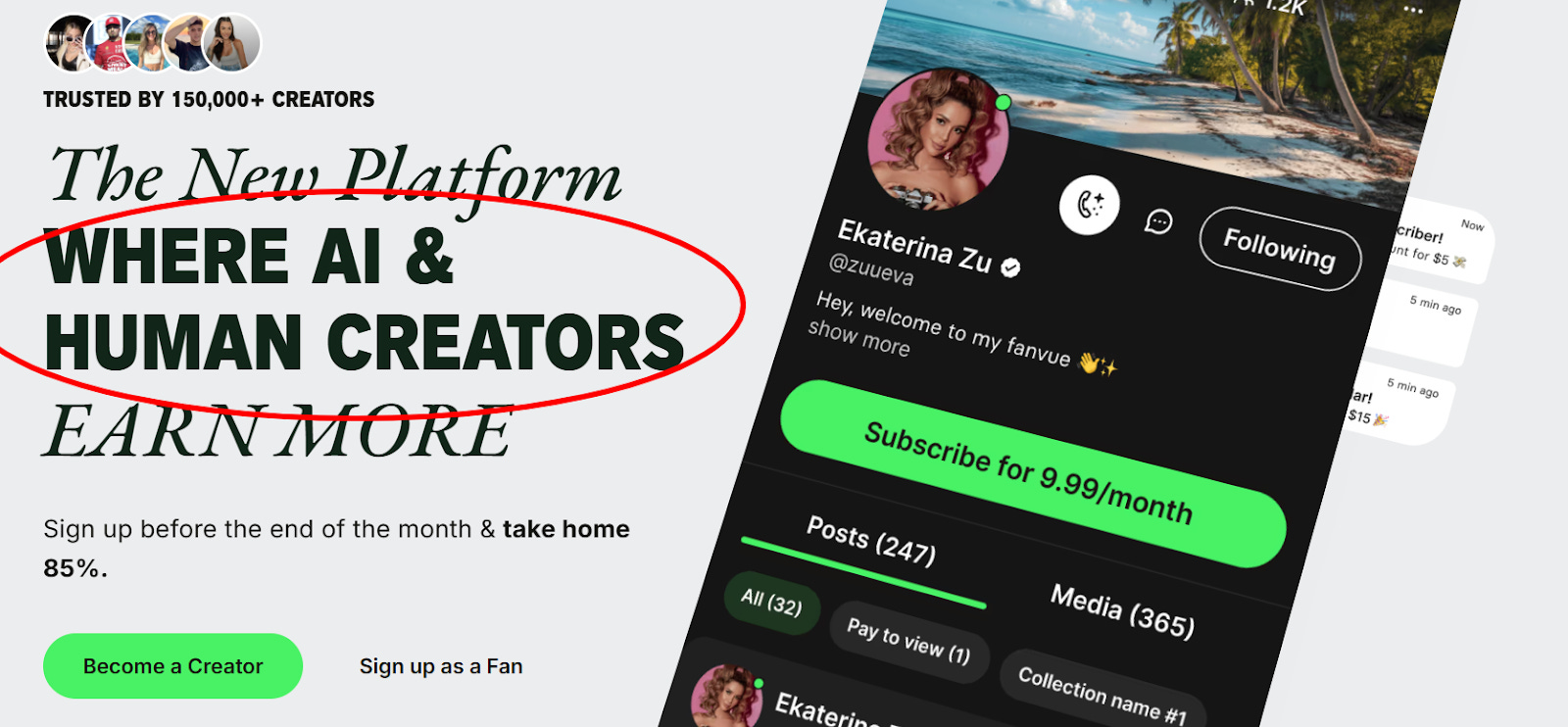
Look at Fanvue. They pitched themselves as “the AI-powered creator platform.” They didn’t even launch with full AI functionality—but they understood the market, carved out a bold message, and executed. Now they’ve positioned themselves as a hybrid platform where creators (AI + real) earn 24/7. And they’re winning.
If your platform doesn’t solve a clear problem or make creators more money, why would anyone switch?
You don’t need 100 features. You need one clear reason to exist.
🚫 2. Treating Paid Ads Like a Growth Strategy
Most founders feel like they’re doing the right thing when they launch with ads. They run 24-hour campaigns, drive traffic, acquire users, and watch the numbers go up. It feels like growth. But in the adult creator space, this strategy backfires almost every time.
Here’s why: the acquisition costs are high, and the lifetime value is usually low—especially early on. That’s a death combo. You’re burning money fast, and nothing sticks. It’s like pouring water into a bucket full of holes. Every creator or fan you pay to acquire leaves within 30 to 60 days.
Your ROI?
Zero—or worse.
And here’s what most forget: creators leave when they don’t see engagement. They come in with hope—maybe this is the platform where they finally build traction. But if they don’t get traffic, fans, or earnings within the first few weeks, they churn. Fast. That $50 you spent to bring them in? Gone. They upload once, see no action, and disappear.
This is where so many platforms quietly die. Not because they didn’t have creators or users—but because no one stayed. Retention isn’t just about keeping numbers up. It’s social proof. When creators leave, fans notice. When fans leave, creators lose faith. It becomes a feedback loop. Everyone assumes, “Nothing’s happening here,” and they move on.
And here’s the kicker: most of this is avoidable.
Retention starts with systems. You need to give creators a reason to stay. That means onboarding that gets them earning fast. That means tools to engage fans—messaging, shoutouts, requests, shops. That means a support team that actually helps, not just answers tickets.
I’ve seen platforms blow through $10K+ in ad spend, only to realize their creators didn’t make a dime.
Real growth isn’t about throwing money at ads. It’s about making sure the people who join actually stay, earn, and succeed.
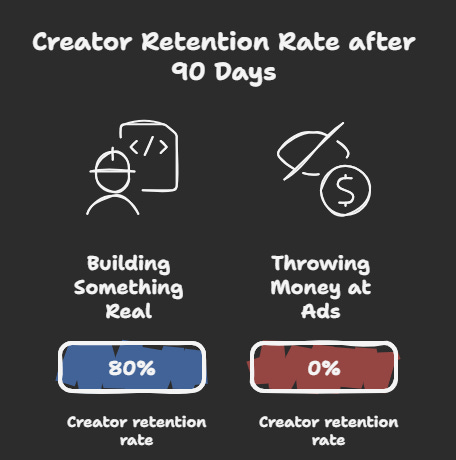
If 80% of your creators are still around in 90 days and making money?
Congrats-you’re not just acquiring. You’re building something real.
❌ 3. Weak Monetization Strategy
So you’ve got your adult platform ready. The tech works. The branding looks sharp. Maybe a few creators are already uploading content.
But then the hard truth hits you:
Nobody’s making real money. Not your creators. Not you.
This is where 90% of platforms quietly die—not from lack of traffic, but from a broken or shallow monetization model.
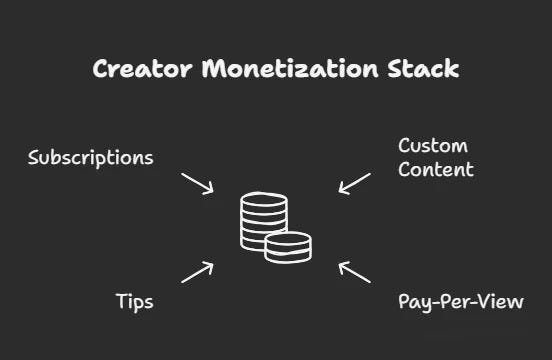
You launched with subscriptions. Maybe you added tipping or a PPV feature. But… it’s not clicking.
Relying on just one way to make money is like building a house on one leg—it’s not going to hold.
Most founders copy what OnlyFans does on the surface. But without understanding why those models work—or how they evolved—you’re just guessing. And creators can feel that.
Here’s what I see over and over:
Vague or confusing payout systems
Fee structures that make creators hesitant to commit
Platforms underpricing everything to seem “competitive,” but end up sabotaging their own margins
And when creators don’t make money within the first few weeks?
They ghost.
And once they leave, users follow. It’s a chain reaction.
❌ 4. Founder-Platform Disconnect
Patrick Nielson, the CEO of FeetFinder, didn’t start his platform because he had a foot fetish—he’s been very open about that.
In an interview with YNOT, he explained that the idea actually came from what he was seeing in college.
A lot of his female friends would casually mention how guys were sliding into their DMs, offering to pay hundreds of dollars for feet pics. One friend even managed to pay her rent entirely from selling foot photos.
That stuck with him. He started wondering:
Why isn’t there a real, trustworthy platform for this?
Why are people forced to use Twitter DMs and sketchy backchannels to make money doing something so specific, yet clearly in demand?
When he tried to explore what platforms were out there, he found most of them were scams. There was no legitimate, verified marketplace where sellers and buyers could interact safely and with confidence.
So instead of jumping straight into building an app, Patrick did the smart thing—he listened.
He started with a simple Twitter profile to test the waters.
And it didn’t take long to get traction. Followers rolled in. People were interested.
There was clearly demand—so he began working on building the actual platform.
That’s how FeetFinder was born.

And today, it has over 5+ million users.
❌ 5. Underestimating Payment + Compliance Hell
A lot of people get inspired to create a site like OnlyFans & Fanvue. They think:
“I’ll get some creators, budget a little for ads, and just plug in a payment system.”
But here’s the reality:
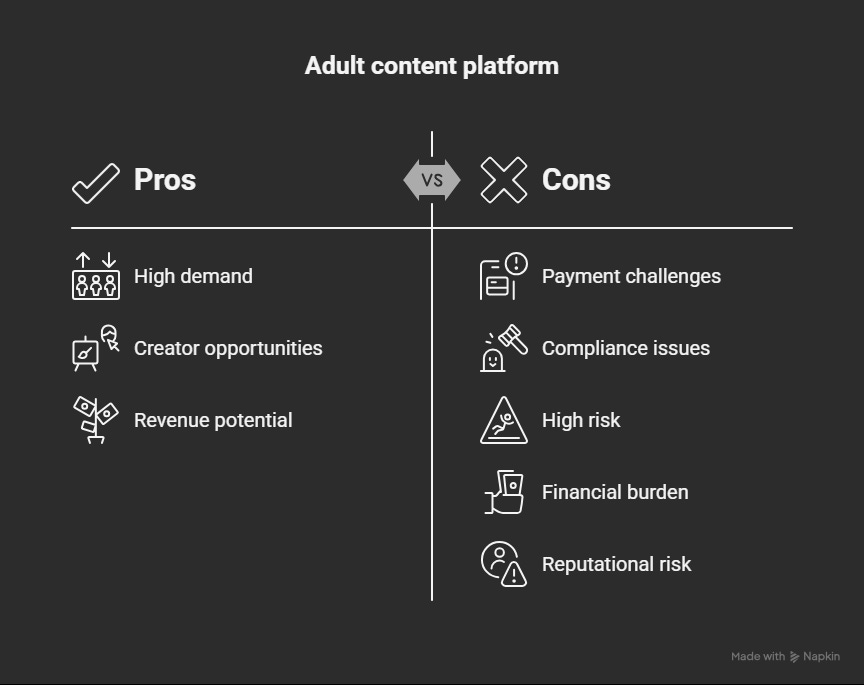
The adult space is one of the most regulated, restricted, and scrutinized industries online.
Governments, banks, payment networks—they all have dozens of reasons to ban or block your platform. And they don’t need much of an excuse.
Creating the platform is easy. Keeping it alive is the hard part.
Payment processors are your first roadblock.
If your business depends on one payment processor, you don’t have a business—you have a single point of failure.
Stripe? Won’t touch adult content.
PayPal? You’ll be banned in weeks, if not days.
Mainstream banks? Almost always a no.
You’ll need to:
Set up 2–3 different processors
Integrate backup options (ACH, crypto, prepaid, regionals)
Expect a $1,500–$2,000 rolling reserve just to go live
Prepare for frequent chargebacks and account reviews
And then there’s compliance.
Your platform must have airtight age verification. No shortcuts. No “upload a selfie” nonsense. If even one underage case slips through, you’re not just banned—you’re done.
One mistake, and it could cost you your whole business—or worse, legal action.
This isn’t fearmongering. It’s the actual environment adult platforms operate in.
So before you get excited about building the next “OnlyFans alternative,” ask yourself:
Are you ready to deal with this—every single day?
Because this part isn’t optional.
It’s the price of playing the game.
❌ 6. No Growth Engine
I don’t want to kill your hope. But here’s the truth: creating a platform is 10% of the work. The other 90%? That’s traffic. Audience. Consistent exposure.
And most of you are ignoring that part.
Too many founders launch, bring a few creators onboard, and then just… wait. As if creators are going to magically drive traffic. But that’s not how it works.
If you’re expecting your creators to bring an audience, you’ve already lost.
Unless you’re a rich kid hiring top creators with built-in followings (you know the kind — think Amouranth, Kazumi, or Violet Myers), don’t expect creators to do your marketing for you.
Most creators come to platforms because they need a side hustle. They’re looking for money—not extra responsibility.
That means you need a traffic formula. A repeatable loop. A real engine.
Here’s what that looks like:
Affiliates — turn creators into marketers
Partnerships — cross-promo with other brands or tools
Referrals — give creators a cut to bring in fans
SEO — build search visibility over time
Paid Ads — if you can track ROI without bleeding out
Want proof that growth loops work?
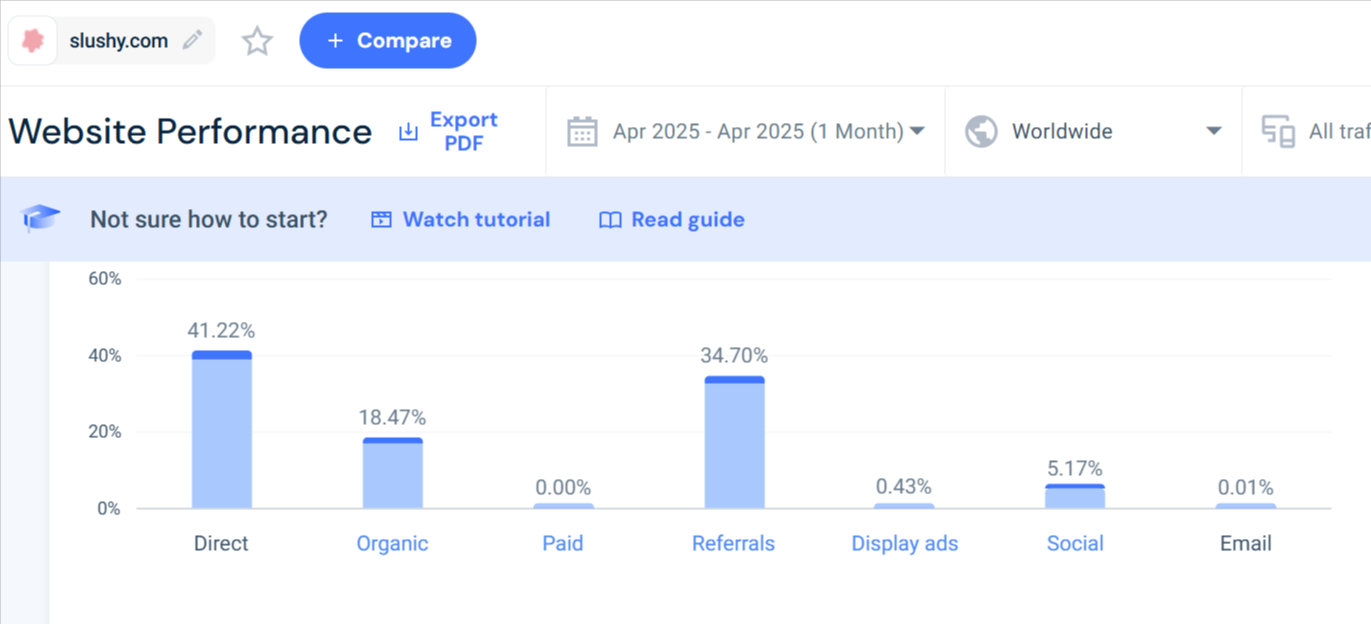
Take a look at Slushy, one of the first venture-backed adult creator platforms.
According to Similarweb (April 2025 data), they’re not relying on just one channel:
41.22% of traffic is Direct
34.70% from Referrals
18.47% Organic Search
5.17% Social
0.43% Display Ads
0.00% from Paid Search
0.01% from Email
They’ve clearly invested in more than just “hiring creators and hoping for the best.”
They built distribution.
If you don’t figure out your traffic engine, your platform will sit in silence—no matter how beautiful your UX or how loyal your first 10 creators are.
Don’t rely on creators to do your job. Build the system that brings fans in—then let your creators shine.
❌ 7. Stigma Paralysis
Remember when OnlyFans announced it was banning adult content back in August 2021?
Yeah—that moment when the internet collectively went, “Wait, what?!”
It was wild. The very platform that exploded in popularity because of adult creators suddenly turned around and said, “Actually… we’re not doing that anymore.”
It felt like McDonald’s announcing they were done with burgers.
The backlash was instant.
The creators were furious.
Fans were confused.
And public trust? Cracked overnight.
Within days, OnlyFans backtracked and reversed the decision—but the damage was already done.
That moment didn’t just expose shaky leadership. It revealed something deeper:
They got scared. Not of growth or competition—but of stigma.
Pressure from banks, investors, and mainstream media made them second-guess the very foundation of their brand.
And guess what happened next?
Fansly happened.
While OnlyFans fumbled their message, Fansly stepped in—loud and proud—saying: “Hey creators, we’re not going anywhere.”
They positioned themselves as the reliable, sex-positive alternative—and they took off. In that one moment of hesitation, OnlyFans handed their competition a brand story and a surge of new users.
That’s stigma paralysis in action.
Teams freeze.
Founders panic.
Brands lose their voice trying to play it safe.
But here’s the truth:
You can’t scale what you’re too afraid to stand behind.
If you’re building in the adult space, you need to own it—loudly, publicly, and unapologetically.
Because when you hesitate, someone else will step in with confidence—and take your place.
More ways to earn = more reasons for creators to stay = more money for everyone involved.
It’s not about turning your platform into a Swiss Army knife overnight.
It’s about building paths to profit for creators—step by step.
You don’t need to launch like CamSoda, with every bell and whistle from Day One.
But you do need to think like a business, not just a content site.
Start with one strong revenue model.
Validate it.
Then stack new layers based on what users and creators actually do—not what you think they’ll want.
Because at the end of the day, the platforms that win are the ones that make creators money—not just give them another place to upload content.
✅ What the Winners Do Differently
So, what do the winners actually do differently?
Here’s the playbook that keeps showing up behind every creator startup that doesn’t just survive—but thrives:
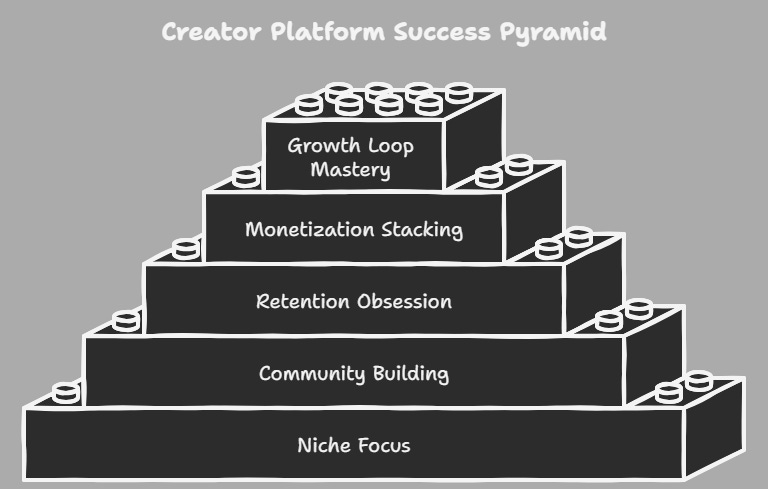
They niche down hard. They don’t try to be “the next OnlyFans for everyone.” They go deep into underserved spaces—fetish communities, queer creators, ethical porn, or other niches with loyal, passionate fans. Specific always beats generic.
They build community before product. The smart ones don’t start with features—they start with conversations. Twitter threads, Discords, creator DMs. They earn trust before they ship code.
They obsess over creator retention. Onboarding flows, active support, spotlight features, early payouts—whatever it takes to make creators feel seen and supported. They know: if creators stay, fans follow.
They don’t rely on one revenue stream or payment processor. From day one, they think in layers—subs, tips, PPV, affiliates—and they build in payment backup plans. No single point of failure.
They go all-in on one growth loop. Whether it's SEO, creator referrals, TikTok funneling, or viral Twitter content—they pick one channel and go deep before trying to “scale everything.”
This isn’t theory. These are the patterns that show up in real wins—again and again. Ignore them, and you're playing the game on hard mode.
✅ Final Thoughts
If there’s one thing I’ve learned after working with dozens of adult creator platforms, it’s this:
Ideas are cheap. Execution under pressure is everything.
This space is chaotic, competitive, and high-stakes. But it also offers real, life-changing upside—for creators and founders—if you build smart.
Not fast. Not flashy. Smart.
Ignore the hard parts—compliance, monetization, churn—and your startup will quietly bleed out, just like the hundreds that came before it.
But focus on retention. Build for a real niche. Help creators earn early.
And you’ve got a shot at building something that actually lasts
📋 Final Checklist for Founders
Before you launch your creator platform, ask yourself:
✅Do I solve a real, urgent problem for creators?
✅Can creators explain what makes me different in 10 seconds?
✅Is my monetization layered, or am I copying the basics?
✅Do I have at least 2 payment processors ready to go?
✅Am I obsessed with retention—onboarding, support, earnings, visibility?
✅Do I know where my traffic will come from—every week?
✅Am I proud to say what I’m building publicly, even if it’s taboo?
If you’re missing more than one or two of these… pause.
Rethink. Refocus. Build the foundation before the features.
Because in this industry, you don’t get infinite chances.
And the ones who win? They don’t just build platforms.
They build systems creators can trust.
💬 Want More?
I'm putting together more real-world breakdowns like this—covering creator monetization, growth loops, retention systems, and high-risk playbooks.
Subscribe to stay updated, or hit reply and tell me what you're working on.
Let’s raise the bar in this space—one founder at a time.